
The plastic straw man argument
Communists: Making life miserable for the middle class one mandate at a time.
In 2011, Milo Cress, a 9-year-old fourth-grader in Vermont, calculated that Americans use 500 million plastic straws a day—or 1.6 per person per day. No one had ever bothered to calculate that number before, just like not until John Lennon read it in his newspaper, did people know how many holes it takes to fill the Albert Hall.
Cress had a simple mission. He asked local restaurants to ask customers if they wanted a straw before giving them a straw. That made sense because straws cost money and throwing away an unused straw is just a waste of money.
CNN and other news outlets picked up on the issue. No one bothered to verify the lad’s calculation that we use 183 billion straws a year. That is 73,000 metric tonsof plastic straws a year.
Industry estimates were loser. Technomic’s estimate was 30,000 metric tons per year while Freedonia estimated 60,000 metric tons. The Foodservice Packaging Institute said 37,000 metric tons—half the Cress estimate.
At the time, U.S. manufacturers annually produced 13,000 metric tons of plastic straws but no one knew how many we imported from Red China. We still don’t.
I am not knocking Cress. He has a mission and he succeeded. Restaurants and customers in Vermont are better off for his Cressade.
But the media and the watermelon environmentalists took his number and transformed it into a campaign against plastic straws.
On July 19, 2018, NPR proclaimed: How The Campaign To Ban Plastic Straws Got Its Start
ARI SHAPIRO, HOST: Starbucks, Ikea, Alaska Airlines, the city of Vancouver, Scotland—they’re all banning plastic straws citing environmental concerns. It’s starting to feel like a global movement. So why did this environmental campaign take off the way it did, and will it stick? Here’s Stacey Vanek Smith of NPR’s daily business podcast The Indicator.
STACEY VANEK SMITH: Plastic is a huge problem in our oceans. But straws are a relatively minor part of that problem. They represent just a tiny fraction of our total plastic waste. Dune Ives is the executive director of Lonely Whale, the environmental group that spearheaded the straw war in the United States last year.
DUNE IVES: When we looked at the plastic straw itself, we realized it’s the one thing that connects us every single day to the plastic crisis. So that’s where as an organization we landed on the straw.
VANEK SMITH: Lonely Whale was struggling with this thing environmental groups often struggle with the scope of the problem is enormous. Plastic is in everything. And getting people to act can be really hard because the whole thing kind of seems hopeless. But the straw had a few things going for it. First, straws are everywhere. We use millions of them every day. Second, people tend to use straws in public, so giving them up is like a public statement. And third, we don’t really need them.
IVES: It’s the one thing where there’s an easy-to-implement solution. So let’s start with the straw as a gateway plastic.
The gateway plastic—as if plastic were a drug. But plastic is not a drug. If it were, NPR would campaign to decriminalize it.
NPR was part of the propaganda campaign. Marine biologist Christine Figgener made a video showing a plastic straw being removed from a sea turtle’s nose. How the straw got there could is anyone’s guess but celebrities—Tom Brady, Leonardo DiCaprio, Chelsea Clinton and Martha Stewart—bought in as they wanted to be the first to join the latest and greatest crusade of them all.
The oceans contain 352,670,000,000,000,000,000 gallons of water—352.67 quintillion. (Better learn what a quintillion is because that eventually is how we will measure the national debt.)
A plastic straw weighs 4 grams.
Most of American straws wind up in a land fill. Nevertheless, the argument is plastic straws magically migrate from landfills in West Virginia to the sea.
I asked Grok about this and it responded, “Plastic straws (and other lightweight plastics) can reach the sea from landfills primarily through leakage of mismanaged or inadequately contained waste, followed by transport via wind, water runoff, and rivers.”
How straw cut through the Earth to make it on this Finding Nemo mission to stuff a sea turtle’s nose went unexplained.
Grok said, “There is solid empirical evidence that microplastics form from buried plastic waste and appear in leachate, and that imperfect containment can allow some of that leachate (with microplastics) to reach the local environment. There is not clear, direct proof that whole plastic straws buried under proper covers and liners are migrating out of inland sanitary landfills and ending up in the sea as a regular occurrence. Claims that ‘landfill plastics go to the ocean’ often blur open dumps, mismanaged waste, coastal erosion sites, or pre-burial litter with properly engineered, buried facilities. For the specific case of buried sanitary landfills, the risk for macroscopic items like straws is considered very low under normal operation.”
Worldwide, annual plastic pollution of the oceans is estimated at 800,000 to 2.7 million metric tons.
The water in the oceans weigh 1.37 quintillion metric tons—roughly a trillion times as much.
1% of that plastic in the oceans come from America.
81% comes from Asia.
Watermelon environmentalists don’t care about the environment. If they did they would call for boycotts of goods from India, Red China and Vietnam.
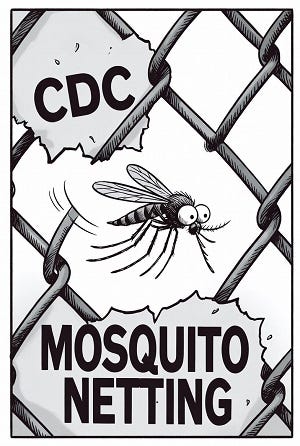
This is pseudoscience just like wearing a mask to protect you from a virus. That was like using a chain link fence as mosquito netting. The masks were not there to protect you. They were used to measure the level of obedience in society.
The name watermelon environmentalists means they are green on the outside and red in the middle. Their cries of saving the Earth are just a communist psy ops. The prime target of communists always is the middle class because kulaks are independent.
Kulaks were peasant farmers in Russia who had the audacity to own some land and livestock. Lenin and Stalin demonized them in an effort to seize their farms and create collectives which would turn peasants into serfs again.
Westerners mocked the five-year plans as failures but prosperity was never the goal. Communism is not about economics; it is about controlling people. It worked for 70 years in the Soviet Union. It still works in Red China.
Restaurants in America are largely owned by the middle class, be they independent operations or a franchisee for Applebee’s, McDonalds and all the rest.
Cities in California have begun to ban drive-throughs.
It was lunchtime on Saturday in Southern California and the hunger was 20 cars deep at the In-N-Out Burger drive-through line. Nose to taillight, the traffic streamed into a jammed parking lot anchored by the Culver City Costco—past seas of parked cars, around families with heaped carts and toward the Costco gas station and 15-minute oil change shop.
The sun glared at the pavement. The air smelled of hot exhaust and onions.
“This traffic is insane,” said Pierre Amoore, a 64-year-old photographer from Santa Monica tucking into a $6.35 Double-Double in the front seat of a Hyundai. “But this is the best burger in the world to me.”
NYT selected In-N-Out because like Chik Fil-A, it is a Christian family business.
The story continued:
Is such gratification worth the chaos? That has been the sizzling debate lately in parts of California, the car-obsessed state that gave rise to America’s drive-through culture. Leaders in several cities are calling for drive-through crackdowns, arguing that they threaten the modern California Dream of clean air, safe streets and walkable communities.
Clean air, maybe. Safe streets and walkable communities? Not with fentanyl zombies pooping on the sidewalk.
A few years ago, California tried to ban plastic straws but had to settle for the Cress solution of asking if the customer wanted a straw with that.
Raising minimum wage and ending tips are two other ways to attack kulak restaurateurs and shopkeepers. If the left were worried about workers, they would call for ending minimum wage and would have supported Trump’s ban on taxing tips.
Fifth U.S. Circuit Judge Don Willett and his sister, Donna, were raised by their mother. When her husband died, she went to work at a truck stop restaurant near Talty, Texas, to support her family. The judge calculated that she walked a quarter million miles waiting tables over 55 years. I am sure she appreciated every every tip, even if it were a dime.
Perhaps that is why Judge Willett is a conservative.
Milo Cress is now 24. He has moved on from his fourth grade school project. He is working in AI. That’s as happy an ending as I can find today.
Communism is not an economic plan. It is a control system. Plastic-straw bans, drive-through crackdowns, minimum-wage mandates, tip games, and anti-business rules all move in the same direction: harass the small operator, squeeze the franchisee, punish the restaurant owner, and make middle-class independence harder to sustain. The kulak is always the target. Today he owns a diner, a burger joint, a truck-stop counter, or an HVAC shop instead of a farm. The machine hates him because he feeds families without permission. The plastic straw man argument was never about plastic. It was about power.
After Pittsburgh voluntarily cleaned itself in the 1960s without a dime from government, can anyone recall an environmental cause with any legitimacy? They are invented accounts combining the appearance of waste, selfish over use, and convenience as guilt to control and destroy.
I may use 1.6 plastic straws a year. But you know who uses a lot of them? All those leftists clogging up the Starbucks drive through getting their “coffee” that is really a modified milkshake with a splash of coffee to make it official. And most of those are obese women.
Happy Monday.