
Our presidents
“When 3 of your 7 Cabinet members are crooks, maybe you shouldn’t be president.”
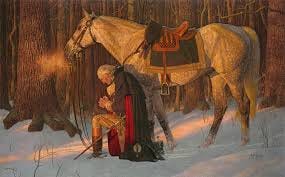
Today we celebrate George Washington’s Birthday in honor of the first president. In 1879, it became an official holiday. Confused people illiterate about American history call it Presidents Day.
Let’s look at the presidents anyway.
Washington was first in war, first in peace, first in the hearts of his countrymen. He was the Father of the Country. Patriots began commemorating his birthday as early as 1778. As president he established the federal government. He lost half his fortune in the American Revolution, which is likely why Washington had the central government assume the remaining war debt of the states.
To pay for it, he (and Congress) imposed tariffs and a tax on whiskey that favored the big distillers over home brewers. This led to an insurrection by Appalachians. He gathered up an army from state militias and marched 13,000 troops to Bedford, Pennsylvania, which pretty much ended the Whiskey Rebellion—but moonshining continued. We’re Americans, dagnabbit.
Next came John Adams. As president, he avoided war with France. The French were miffed about Washington’s Neutrality Act and harassed Americans. Fearing war with France, Adams signed four alien and sedition acts into law. Only one survives today—the Alien Enemies Act, which is now used to deport the worst illegal aliens.
Next came Jefferson, best known as president for the Louisiana Purchase and sending Lewis and Clark to explore and map the territory, which made the nation transcontinental. He deployed the Navy and Marines to fight Muslims in the First Barbary War. The major downside to his presidency was the Embargo Act of 1807 because it killed exports for the young nation.
Next came Madison. The shortest president stood tall in the War of 1812. The British burned down the White House but the two sides called it a draw. A century later, they sided together in World War I.
Next came Monroe, who is best known for the Monroe Doctrine that kept Europe out of the Western Hemisphere, although Canada remained a British colony. He acquired Florida. He signed the Compromise of 1820, which forestalled a civil war for 40 years—or two generations.
Despite the Panic of 1819, his presidency was the Era of Good Feelings. He won re-election effectively by acclamation as he received all the Electoral College votes. But he gave one vote to his successor, John Quincy Adams, to retain Washington’s status as the only president elected unanimously.
Next came John Quincy Adams. He lobbied Congress to spend money building roads, canals and harbors. He did succeed in linking the Great Lakes to the Gulf of America via canals to the Ohio river. He is best known for being the only president elected by the House of Representatives. Andrew Jackson may have had pluralities in the popular vote and the Electoral College but JQA had the votes in Congress.
Next came Jackson. He paid off the national debt and ended the national bank. He delayed the civil war by nearly 30 years by handling South Carolina’s attempt to nullify tariffs. But his Trail of Tears seizure of Indian lands in Southern states overshadows his accomplishments nearly two centuries later.
Next came Martin Van Buren. He suffered the Panic of 1837, which he inherited from Jackson. He lost the Seminole War in Florida.
Next came William Henry Harrison. Tippecanoe gave the longest inauguration speech and died a month later. A short and sweet presidency that did no harm.
Next came John Tyler. He annexed Texas. He also signed the Pre-Emption Act, which allowed farmers to buy up to 160 acres of land out west for $1.25 an acre. This was a precursor to the Lincoln’s Homestead Act. Nobody in Congress liked Tyler.
Next came James Polk. Through the Mexican War and diplomacy with Great Britain, he established the boundaries of Continental United States. He worked himself to death as he died 3 months after his term ended.
Next came Old Rough and Ready, Zachary Taylor, a hero of the Mexican War. He made the Panama Canal possible by getting Great Britain to agree to stay out of Central America. He signed the Compromise of 1850 into law. It sucked.
The Galphin Affair implicated his secretary of war, his treasury secretary and his attorney general in the settlement of a claim by the Galphin family over a Revolutionary War debt. Taylor had nothing to do with it but when 3 of your 7 Cabinet members are crooks, maybe you shouldn’t be president. He died on July 9, 1850 from acute gastroenteritis.
Next came Millard Filmore who immediately replaced Taylor’s cabinet. He abolished slave trading in DC but not slavery. And he strengthened the Fugitive Slave Act, which required abolitionist states to return runaway slaves. He was the last Whig president and good riddance.
But he also opened up trade with Japan. What possibly could go wrong?
Next came Franklin Pierce, who won in a landslide but he did so poorly, his party declined to re-nominate him, which made James Buchanan president, who made the civil war inevitable.
Then came Lincoln. His leadership and victory in the Civil War are well known and I need not detail that. While he was waging a civil war, he also pushed the Homestead Act, the establishment of land grant colleges such as Ohio State, and the first transcontinental railroad.
His diplomatic skills were put to a test by navigating the egos of his Cabinet of Rivals. He succeeded.
On the night of Lincoln’s assassination, William Seward—his chief rival for the 1860 Republican nomination—was nearly stabbed to death by Lewis Powell. When church bells the next morning signaling Lincoln’s death, Seward said he knew it was Lincoln because otherwise, Lincoln would have been at his bedside.
Next came Andrew Johnson. His one accomplishment was the purchase of Alaska—Seward’s Folly. Johnson’s biggest failure was denying freed slaves their rights as Americans. He’s best known for a bogus impeachment over an unconstitutional law that would not let a president fire Cabinet secretaries without the permission of the Senate. The Supreme Court years later struck the law down.
Next came Grant. The man who won the Civil War had to heal the nation. His reconstruction went a long way in uniting a torn people. He dismantled the KKK and signed the Civil Rights Act of 1875 into law. Struck down by the Supreme Court, it nonetheless became the model of the Civil Rights Act of 1964.
He made Yellowstone the world’s first national park. That alone should get him into the presidential hall of fame.
Mainstream historians treat Grant as a naïve buffoon who allowed corruption. They cite the Crédit Mobilier scandal but the scandal was a congressman (and future president of Crédit Mobilier) selling stock in the company at discounted prices to buy off the Speaker of the House and other powerful men. Indeed, the fraud pre-dated Grant’s presidency.
Two of his pallbearers were Confederate generals as even in death he worked to knit the nation together.
Next came Hayes. Elected in the most disputed presidential election until 2020, he had to accept the end of reconstruction. He began the reform of civil service, resumed the gold standard and deployed federal troops to quell a violent railroad strike. He also was the first president to use a typewriter and the first president to use a telephone.
He got a busy signal.
Next came Garfield. 200 days into his term, he was shot by Charles J. Guiteau. Garfield lingered on his deathbed for 79 days. His is a depressing story of what might have been. But his successor, Chester Arthur, completed the task on civil service. Arthur also modernized the Navy by building steel ships. He enforced the nation’s first immigration law.
Next came Cleveland. Mostly known for having two presidencies—one successful and one done in by the Panic of 1893. Cleveland balanced the budget, regulated railroads and enforced the Monroe Doctrine. His second term collapsed with the economy.
In between was Benjamin Harrison. Left a surplus, he spent it down. He began construction of Ellis Island to screen immigrants. The Know Nothings were right.
The 25th president was McKinley. He promised peace and prosperity but a short war with Spain made the first claim invalid. America emerged from the war a world power. He returned the gold standard much to the dismay of silver companies. He wrote the McKinley Tariff Act as a congressman, which he enforced as president.
But now he is best known as the man whose assassination by anarchist Leon Czolgosz led to Teddy Roosevelt becoming president.
TR had the Panama Canal built, won the Nobel Peace Prize for mediating the Russo-Japanese War, pushed expansion of the national parks system and busted the trust oligarchies.
But he also expanded the powers of the federal government with the creation of the first alphabet agencies beginning with the Food and Drug Administration, which became a textbook example of the government being the problem, not the solution. It is not his fault because the FDA made America healthy again. A century later, Big Pharma and food companies have taken over. They used regulations as a barrier to competition. The revolving door between regulators and the regulated needs to be fixed.
Next came Taft. TR was a tough act to follow. Taft continued and built upon TR’s antitrust and regulatory efforts but he had all the excitement of a bowl of oatmeal. TR wanted a third term and split the party, which resulted in the Wilson presidency.
Historians praise Wilson but his reforms of yesteryear are the problems of today. The Federal Reserve Bank promised to deliver an end to recessions but it failed to prevent or mitigate the Great Depression.
On his watch, the nation amended the Constitution for the first time in almost a half-century by allowing Congress to impose an income tax, mandated the direct election of senators, banned alcohol, and gave women the right to vote. The first three were disasters and I am beginning to question the wisdom of the 19th Amendment.
Next came Harding. Historians piss all over him, but history shows he was very successful in his all-too-brief presidency. He inherited a post-war depression, which gave him the opportunity to cut taxes and cut the federal government. That led to the Roaring ’20s.
His vice president, Calvin Coolidge, continued those policies and signed the Indian Citizenship Act. You see, despite the 14th Amendment, Indians born in the USA were not considered citizens. After major floods in the Mississippi, Coolidge signed into law the Flood Control Act of 1928, which led to the construction of floodwalls, levees and spillways to mitigate future floods.
Next came Hoover. He sucked so much they named a vacuum cleaner after him.
Next came FDR, a socialist who used the crisis of the Great Depression as an opportunity to expand the government. His policies prolonged the Depression. Harding gave us the Roaring ’20s. FDR gave us the longest economic downturn in our history. Which one do academics praise?
FDR, though, rallied the nation to win World War II. His efforts began on June 11, 1939, when he held a hot dog picnic for King George VI, three months before the war. It humanized both men and began our special relationship with England.
Next came Truman. Hiroshima and Nagasaki ended World War II and kept the Soviets from gaining a foothold in Japan. He helped rebuild allies and enemies alike. The Berlin Airlift kept Stalin from taking over all of Berlin. Truman birthed NATO and the UN, good ideas that turned bad decades later. He recognized Israel as a nation and won back South Korea from the communists.
Next came Ike, a five-star general who won World War II in Europe. He ended the Korean War. He began the St. Lawrence Seaway and the interstate highway program. He dispatched federal troops to enforce court decisions mandating the integration of schools. He launched our space program. He was as boring as mashed potatoes, but he oversaw a decade of prosperity that revived and expanded the middle class. A great warrior and a great president. Of course historians ignore him.
Next came JFK. His presidency began with the disastrous Bay of Pigs invasion, followed by a disastrous meeting with Khrushchev in Vienna that led to the decision to build the Berlin Wall. The meeting also led to the decision by the Soviets to place nuclear missiles in Cuba.
But JFK fell up, not down as his success in the Cuban missile crisis led to a rare midterm election win for a president’s party.
Next came LBJ. He used his popularity following the assassination of Kennedy to pass the Civil Rights Act of 1964. But his Great Society programs did the opposite as they created a lower class of people dependent on federal welfare.
We made two mistakes on Vietnam—going in and pulling out. He went in.
Next came Nixon. Depending on how you view the Kennedy assassination, Nixon was the first or second president done in by the deep state. Watergate obscured his ending the Vietnam War and using Red China as a wedge against the USSR. That move helped make the Fall of the Wall possible.
Next came Ford. He pardoned Nixon but did nothing to keep the Viet Cong from overrunning Saigon. But he was BTC—better than Carter, who succeeded him.
Carter got Egypt and Israel to make peace. But he gave away the Panama Canal and enabled Muslim hoodlums to take over Iran and make it a terrorist base. The economy sank and the overblown Three Mile Island crisis ended the USA’s nuclear power ambitions. Blame him for your electric bills.
Next came Reagan. He Made America Great Again by reducing inflation and increasing employment. Like Nixon, he was re-elected in a 49-state landslide. Unlike Nixon, Reagan survived an attempted coup by the Deep State.
God protected him from an assassin’s bullet.
Next came Bush 41. He took credit for the collapse of the Soviet Union. He also kicked Hussein out of Kuwait without turning it into a forever war. But read my lips: More New Taxes.
Next came Clinton. History remembers him for a blowjob. Thanks to Newt Gingrich, Clinton balanced the budget.
Next came George W. Bush. He united the country after 9/11 but then created a bureaucracy (Homeland Security) and started a couple of wars. His worst policy was No Child Left Behind, which actually rewarded schools for failure. He refused to bail out Lehman Brothers for $50 billion and wound up bailing out everyone else for $700 billion.
Next came Obama. A Muslim-loving communist, he made insurance companies rich by mandating the purchase of health insurance while giving a trillion dollars in federal subsidies over the years. He also gave us Biden’s auto pen.
The jury is out on President Donald Trump because while his first term ended well, his second term has just begun. The deep state has spent the last decade trying to torpedo him in many ways including an attempted assassination. God protected him because He has bigger plans for Trump.
Next came Biden. He surrendered Afghanistan to the Taliban and America to the bureaucracy. He called half the nation garbage. His presidency was an auto pen. His family is a pigpen.
America has had its share of good presidents but too many were terrible and are unworthy of being honored. That’s why I still celebrate George Washington’s Birthday.
Besides, Biden already has a day. June 10 is National Ballpoint Pen Day.
Two polls today.

DJT is most consequential world leader since Churchill.
Mr. S, thank you for an in-depth look at our presidential history
Glad you are a columnist instead of a great history teacher